
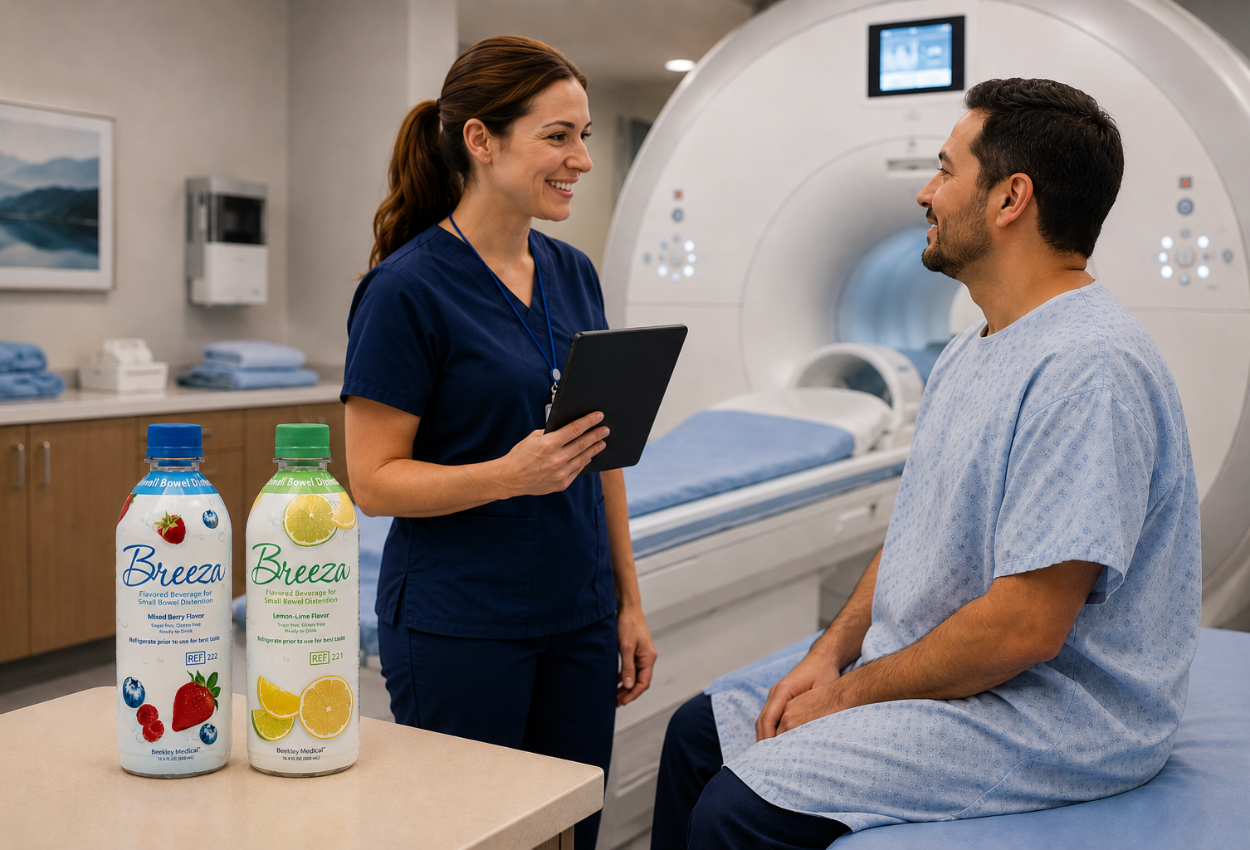
 As radiologic technologists, we know that the success of MR enterography starts well before
the patient goes into the magnet. It begins in the prep room, the moment a patient is handed
their beverage for the bowel study.
Achieving adequate small-bowel distention is an important part of obtaining high-quality
diagnostic images during MR enterography. For years, that has meant navigating patient
resistance, incomplete ingestion, workflow delays, and the occasional GI complaint that
sends everything sideways.
That experience is what made me take notice when Breeza® flavored beverage for small bowel distention by Beekley Medical entered the picture.
MRI vs. MR Enterography: What Makes MRE Different?
MRI is a versatile imaging modality used to evaluate many areas of the body. MR enterography
(MRE) is a specialized MRI examination designed specifically to evaluate the small bowel.
The distinction matters because the small bowel can be challenging to assess with routine
abdominal imaging.
MRE provides detailed images of the small intestine and surrounding structures, allowing radiologists to evaluate the bowel wall and look for findings such as inflammation, narrowing, obstruction, fistulas, abscesses, and other abnormalities.
Physicians commonly refer patients for MRE when they need a closer look at the small bowel,
particularly when evaluating or monitoring conditions such as Crohn’s disease and other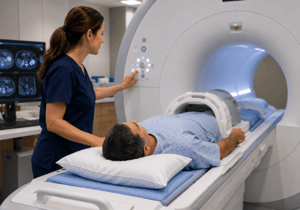 inflammatory bowel disorders. MRE can also be used when there is concern for other small-bowel abnormalities.
For patients who require repeated imaging, MRI offers the additional advantage of not using
ionizing radiation. That can make MRE a useful imaging option when ongoing evaluation of the
small bowel is needed.
From the technologist’s perspective, however, all of that diagnostic information depends in part
on what happens before the patient ever enters the magnet.
The Problem We’ve All Faced
Ask any tech who has worked in both inpatient and outpatient settings, and they’ll probably tell
you the same thing: getting patients to drink the full required volume for an MRE can be one of the most challenging parts of the examination.
Patients may be apprehensive about the volume, the taste, or simply the idea of drinking a large amount of fluid before an MRI. When intake is slow or incomplete, it can affect the workflow and, more importantly, the preparation for the images we’re trying to obtain.
Where Breeza® Flavored Beverage for Small Bowel Distention Fits In
My approach is to introduce Breeza® for small bowel distention as the beverage we use for MR enterography. When patients understand that they’re being offered a flavored beverage rather than something that feels like a traditional medical preparation, I notice a different initial reaction. I also make a point of explaining what they can expect and, when appropriate, contextualizing it against what they may have experienced during previous imaging examinations.
That small amount of explanation can make a big difference in how comfortable a patient feels with the process. Breeza® for small bowel distention helps retain the fluid patients consume, supporting good distention throughout the small bowel and, importantly, into the distal small bowel and terminal ileum down to the cecum.
 That matters during an enterography study because adequate distention gives the radiologist a better look at the bowel wall and lumen—particularly when evaluating for Crohn’s disease, which commonly involves the terminal ileum.
Flavor, Temperature, and What I’ve Observed
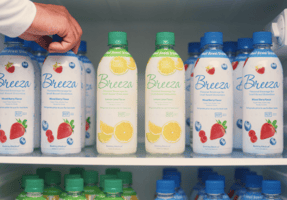
Breeza® flavored beverage for small bowel distention comes in two flavors: Mixed Berry and Lemon Lime. Offering patients a choice gives them a small sense of autonomy during a clinical encounter in which they often have very little control. In my experience, that choice can help with cooperation and willingness to complete the required volume.
I haven’t noticed a universal preference between the two flavors, but I have found that patients tend to respond particularly well to Lemon Lime when it’s served cold. Temperature seems to improve palatability for many patients.
For MR enterography, patients are expected to drink 1,500 mL of Breeza® flavored beverage for small bowel distention. We allow one bottle to be consumed every 15 minutes, providing sufficient time for patients to comfortably finish each bottle while completing the required preparation.
From a technologist’s standpoint, that structured preparation can make a meaningful difference.
When patients are comfortable with the beverage and able to complete their preparation, there
is less time spent coaching them through each sip and more time available to keep the examination moving.
What the Radiologist Sees
Everything we do in the prep room ultimately serves one purpose: getting the best diagnostic
examination possible. Adequate small-bowel distention helps provide the radiologist with the images needed to evaluate the bowel wall, luminal abnormalities, and other findings involving the small intestine.
In my experience, when patients are able to complete their preparation and adequate distention is achieved, the resulting examination is more conducive to the diagnostic evaluation the radiologist needs to perform. The feedback I’ve received regarding image quality has been consistent with that experience.
The Bottom Line
For fellow technologists navigating the oral preparation component of MR enterography, Breeza® flavored beverage for small bowel distention is worth considering. Patient tolerability, preparation compliance, workflow, and ultimately image quality all matter.
In my experience, Breeza® (for small bowel distention) has helped make that part of the examination more manageable for both the patient and the technologist. And sometimes, improving an MRI examination starts with something as simple as what you hand the patient to drink.