
 A patient begins pacing the hallway. They’re restless, having difficulty settling, and getting up more frequently than usual. For a nurse caring for older adults in a behavioral health setting, these moments can quickly become about more than helping a patient feel calm. Agitation can also affect safety.
Older adults may already face an increased risk of falls due to cognitive impairment, mobility challenges, underlying health conditions, or medication side effects. When agitation leads to pacing, wandering, physical restlessness, or attempts to move without assistance, that risk can become even greater.
And for the nurse caring for that patient, the question becomes: What else can I do to help?
Looking Beyond Medication
Medication has an important place in patient care, but nurses also rely on non-pharmacological approaches to help support patients experiencing anxiousness or agitation.
Sometimes it’s reducing stimulation in the room. Sometimes it’s reassurance, redirection, music, or simply sitting with a patient for a few minutes. Clinical aromatherapy is another option often used as a nursing intervention in their toolkit.
Elequil Aromatabs® aromatherapy can be used as a nursing intervention that does not require a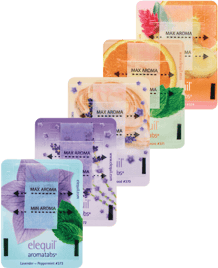 doctor’s order and can be offered to an agitated patient immediately and can help within minutes.
Using 100% pure essential oils, Elequil Aromatabs adhere to a patient’s gown or clothing for hands-free use, allowing aromatherapy to be incorporated without adding a complicated step to the nurse’s workflow.
But what might that look like with an older adult behavioral health population? A nurse-led project set out to explore that question.
What Happened When Nurses Introduced Aromatherapy?
On a 14-bed older adult inpatient mental health unit, nurses implemented lavender-sandalwood Elequil Aromatabs as a non-pharmacological intervention for patients experiencing agitation.
The patients cared for on the unit had behavioral and psychiatric challenges related to conditions including dementia, schizophrenia, bipolar disorders, and major depression, along with concurrent medical conditions. All were considered at high risk for falls.
Rather than looking only at whether patients seemed calmer, the nursing team measured agitation using the Behavioral Activity Rating Scale (BARS) before applying the Aromatabs and again one hour later.
Among the 21 patients included in the two-month project, the average agitation score decreased by 25%, from 5.08 to 3.81, one hour after application.
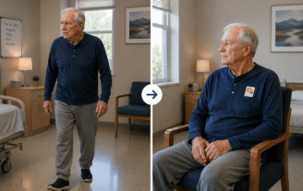
The team, including Ten Mendoza, DNP, RN, PMH-BC and Allan Jay Amurao, MS, RN, PHN, PMH-BC also observed another encouraging outcome: there were no falls among participants during the project period. Historically, the unit had averaged one fall per month during the same two-month calendar period over the previous six years.
While a small nurse-led project cannot establish that aromatherapy was responsible for the absence of falls, the results offer an interesting look at how supporting relaxation and reducing agitation may fit into a broader approach to patient safety.
Sometimes the Practical Details Matter, Too
For a new intervention to become part of everyday nursing care, positive outcomes are only part of the equation. It also has to work in the real world.
Nurses participating in the project found Elequil Aromatabs easy to use, with minimal disruption to their workflow. The hands-free application was compatible with infection prevention protocols, and aromatherapy could be used as a non-pharmacological nursing intervention without the need for a physician’s order.
Patients responded to it, too. Many began asking for their Aromatabs first thing in the morning to help them relax. Some even asked if they could take additional tabs home when they were discharged.
That kind of response says something important. Sometimes an intervention doesn't need to be complicated to make a meaningful difference in a patient's experience.
Giving Nurses Another Option
There is no single answer to agitation or fall prevention, particularly when caring for older adults with complex behavioral and medical needs. But nurses benefit from having options.
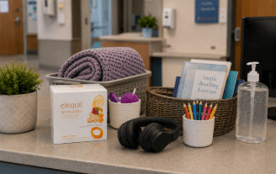 An intervention that can be introduced easily, fits into the existing workflow, and gives a nurse another way to support a patient in a difficult moment can be valuable.
For this nursing team, clinical aromatherapy became one of those options. Following the project, Elequil Aromatabs were incorporated into standard nursing practice on the unit, and the results were shared with other units in the hospital.
Want to see how the nursing team implemented the Elequil Aromatabs® aromatherapy intervention?
Read the full white paper, Nurse-Led Hospital Aromatherapy Intervention Reduces Agitation and Falls in Geriatric Behavioral Health Patients, to explore the project design, results, and lessons learned from the nurses who put this Elequil Aromatabs® based intervention into practice.