
 In a recent blog, we explored how patient discomfort and the realities of everyday life can quietly affect setup precision. The next question is: How can departments help support more consistent setup throughout the treatment course? Every radiation therapy department works toward the same goal: reproducing the setup established at simulation as consistently as possible from the first fraction to the last.
While imaging, immobilization, and standardized workflows all play an important role, setup consistency is also influenced by what happens after patients leave the department. Patients shower, exercise, work, and continue their normal routines throughout treatment. Those everyday activities can affect setup marks, making it important to think beyond simulation day.
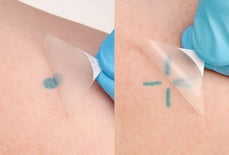 InkRight® Semi-Permanent Tattoos are a needle-free setup marking option designed to help patients maintain consistent setup marks throughout treatment. Whether your department already uses InkRight or is evaluating different marking methods, these three questions can help identify opportunities to support greater setup consistency.
1. Are You Thinking Beyond the Simulation Appointment?
Setup consistency isn't determined on simulation day alone. It's influenced by everything that happens throughout the treatment course.
Simulation is where setup begins, but it's only one point in the patient's journey.
A setup mark may look perfect when it's applied, but over the following days and weeks it's exposed to showers, clothing, exercise, work, hobbies, and countless everyday activities. Most therapists have experienced it, a patient arrives for treatment, and a mark that looked clear at simulation now needs to be refreshed before treatment can begin.
Supporting setup consistency isn't about expecting a mark to remain unchanged throughout treatment. It's about planning for what happens after patients leave the department and having a reliable process for assessing and refreshing marks whenever needed.
When evaluating your setup marking process, it's worth looking beyond how well a mark works on simulation day and considering how it performs throughout the entire treatment course.
2. Does Your Team Have a Consistent Process for Maintaining Setup Marks?
Consistent processes help create consistent patient setups, even when multiple therapists are involved.
Even with the best marking method, there may be times when a setup mark needs attention during treatment.
Without a consistent approach, one therapist may decide a mark is acceptable while another may choose to refresh it. Neither decision is necessarily wrong, but differences in practice can create unnecessary variation over the course of treatment, particularly when multiple therapists are caring for the same patient.
Standardization doesn't have to mean adding more work. Sometimes it's simply agreeing on when marks should be assessed, how they should be refreshed, and what patients should be told if a mark begins to fade. Those small workflow decisions can help create a more consistent experience for both therapists and patients.
3. Are You Considering Each Patient's Daily Routine?
Every patient lives differently, and those differences can influence how setup marks perform throughout treatment.
A standardized workflow is important, but every patient brings unique circumstances that can affect how well setup marks hold up between appointments.
As part of simulation and patient education, consider questions such as:
What activities is the patient involved in that might affect the setup marks? For example, if a patient plans to swim in chlorinated water, additional guidance, such as covering InkRight® marks with petroleum jelly before swimming, may help protect the marks.
Is the location of the setup mark exposed to frequent friction? Clothing, waistbands, bra straps, or medical devices may cause certain marks to wear more quickly than others.
Would this patient benefit from using moisturizers, and how might that affect the setup marks or any temporary covering?
Taking a few moments to consider these factors during simulation can help therapists anticipate potential challenges before they become workflow interruptions later in the treatment course.
Supporting Consistency Every Step of the Way
No department can eliminate every variable. Patients are people first, and everyday life will always continue between treatments.
However, reducing avoidable interruptions can help make daily setup more predictable for therapists while making the treatment experience easier for patients.
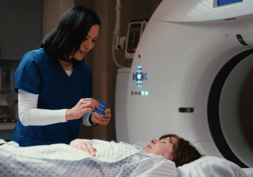 InkRight® Semi-Permanent Tattoos were developed with that goal in mind. The needle-free tattoos are visible on application, darken over time, and are water resistant, helping patients maintain their setup marks through normal daily activities. If a mark begins to fade over time, it can be refreshed and aligned over the existing mark, helping patients maintain an accurate setup mark throughout treatment—without leaving a permanent tattoo.
The most consistent setups aren't built around perfect patients. They're built around workflows that recognize patients are living real lives between treatments. Small improvements in planning, communication, and workflow can help support greater consistency from simulation through the final fraction.
Interested in learning more? Visit the InkRight® product page to explore how semi-permanent tattoos can support setup consistency throughout the treatment course.