 Strong malodors can make an already sensitive care situation more difficult for everyone involved. For healthcare professionals, having a discreet way to manage those odors can make it easier to stay present, focused, and engaged with the patient in front of them. And for the patient, that can mean something just as important: receiving care without feeling embarrassed or self-conscious about how their condition may smell.
That’s where managing malodor becomes about more than clinician comfort. It can also be about preserving patient dignity.
Olora Halo™ Nasal Malodor Barrier was designed to give healthcare professionals a discreet, personal way to manage unpleasant odors while continuing to focus on the patient and the care they’re providing. The soft silicone nasal ring sits just inside the nostrils and uses encapsulated scent to create a personal barrier against malodor.
By helping healthcare professionals manage their own experience with malodor, Olora Halo can help them keep their attention where it belongs: on the patient rather than the odor.
The Patient May Already Feel Sensitive
Malodor can accompany many of the situations healthcare professionals encounter every day, including wound and ostomy care, GI bleeds, and other clinical situations.
For the clinician, the odor may be one part of the task at hand. For the patient, it can feel much more personal.
A patient may already be aware of the odor associated with their condition. They may feel embarrassed by it. They may worry that other people notice it. And during close, hands-on care,  they may be especially conscious of how the healthcare professional caring for them responds.
That can add another layer of vulnerability to an experience that may already be physically and emotionally difficult.
Sometimes a Reaction Happens Before You Can Stop It
Healthcare professionals are trained to remain compassionate and professional in challenging situations. But they’re also human.
A strong or unexpected odor can cause an instinctive reaction. Holding your breath. Turning your head. Stepping away for a moment. A subtle change in facial expression.
None of those reactions mean the clinician cares any less about the patient. But from the other side of the interaction, even a small reaction may feel much bigger.
For a patient who is already worried about an odor, noticing someone pull away or react can reinforce the very embarrassment they may be feeling. This may leave a lasting impression on the patient which may lead to becoming reluctant to engage with the staff or they may provide negative ratings/feedback on patient surveys.
That’s why supporting healthcare professionals in these situations matters.
Give the Clinician One Less Thing to Think About
The goal isn’t to make the patient feel like their odor needs to be managed.
It’s to help the healthcare professional manage their own experience so the patient doesn’t have to feel that way in the first place.
A professional product designed to decrease nasal malodor barrier such as Olora Halo gives healthcare professionals an option that stays with them as they provide care. Using toothpaste between two masks, applying VapoRub under the nose, using peppermint oil that can lead to watering eyes can be eliminated.
Small Things Can Shape a Patient’s Experience
Preserving dignity in healthcare often comes down to seemingly small moments.
It’s how a patient is spoken to. How much privacy they’re given. Whether someone explains what’s happening before beginning a procedure. And sometimes, it’s simply being able to provide care without making the patient feel self-conscious about something they may not be able to control.
Managing malodor may seem like a small part of that experience. But when it helps a healthcare professional stay present and engaged during an uncomfortable moment, its impact can extend beyond odor alone.
Protecting patients dignity begins with supporting clinicians to stay focused on what matters: the person, not the smell.
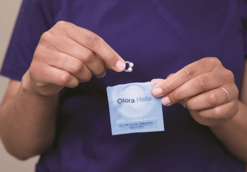
Discover how Olora Halo™ Nasal Malodor Barrier provides healthcare professionals with a discreet, personal way to manage malodor while keeping the focus on the patient by learning more here.