
.png?width=1250&height=850&name=BeekSpeak%20Blog%20Cover%20Img%20Size%20(13).png) Efficient CT-guided procedures depend on consistency from the very beginning.
Efficient CT-guided procedures depend on consistency from the very beginning.
When localization is accurate from the start, CT teams can reduce unnecessary rescanning, improve procedural efficiency, support ALARA initiatives, and help keep busy schedules moving on time.
For CT supervisors, that means:
- Fewer workflow disruptions
- Better scanner utilization
- More consistent intervention planning
- Improved patient experience
- Greater confidence across technologists and radiologist
But in CT-guided intervention planning, small localization issues can quickly create much larger operational problems.
A grid that lifts, buckles, or shifts during scanning can lead to repositioning, corrective needle adjustments, repeat imaging, and delays that ripple through the rest of the day.
Thirty seconds here. Two minutes there.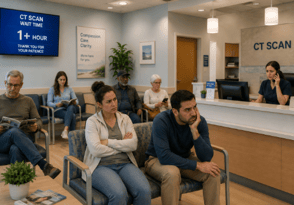
By the end of the shift, the schedule is behind, room availability is tighter, and both staff and patients feel the impact.
That’s why GuideLines® CT Biopsy Grids are designed to help reduce those disruptions before they start.
Designed to Help Keep Procedures Moving Efficiently
GuideLines® feature an exclusive all-over adhesive backing that conforms smoothly to natural body contours and stays flat on the skin throughout the scan.
That consistent skin contact helps ensure the skin mark corresponds accurately to the grid line visualized on the CT image, helping clinicians maintain more reliable localization and confident needle targeting during intervention planning.
For CT departments, that can help support:
- Fewer corrective adjustments
- Reduced repeat imaging
- More efficient room utilization
- Better procedural consistency across teams and shifts
- Reduced unnecessary radiation exposure
Because when intervention planning runs smoothly, the entire department benefits.
Features That Support Accurate Localization
GuideLines® are engineered specifically for CT-guided intervention planning.
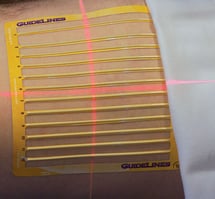 Flexible Adhesion Across Anatomy - The medical-grade adhesive contours smoothly to curved anatomy without lifting, tenting, or distorting the grid during scanning.
Bright Imaging Without Distracting Artifact - Low-density non-metallic lines image brightly while helping avoid noisy artifact during visualization.
Uniform Grid Spacing - Consistent parallel spacing supports accurate identification of needle entry sites and precise targeting.
Built-In Orientation Landmark - Extra spacing between grid lines 1 and 2 provides a quick right-to-left orientation reference during planning.
Small Improvements Can Have a Big Operational Impact
CT supervisors know department efficiency is rarely affected by one major issue alone.
More often, it’s the accumulation of small interruptions, repeat imaging, repositioning, workflow slowdowns, and prolonged procedures that gradually impact throughput and patient experience throughout the day.
Request your complimentary sample here to learn how GuideLines helps reduce misregistration during CT-guided intervention planning, and support smoother procedures, more efficient workflow, and greater consistency across your department.