 Every day, radiologists make decisions that can change a patient's life. Recommend a biopsy too often, and patients may undergo unnecessary procedures. Recommend too few, and an aggressive cancer could be missed when early detection offers the greatest chance for successful treatment. Finding that balance is one of the most important challenges in breast imaging. As research continues to evolve, understanding overdiagnosis can help radiologists make more informed biopsy recommendations, support confident clinical decision making, and improve patient care.
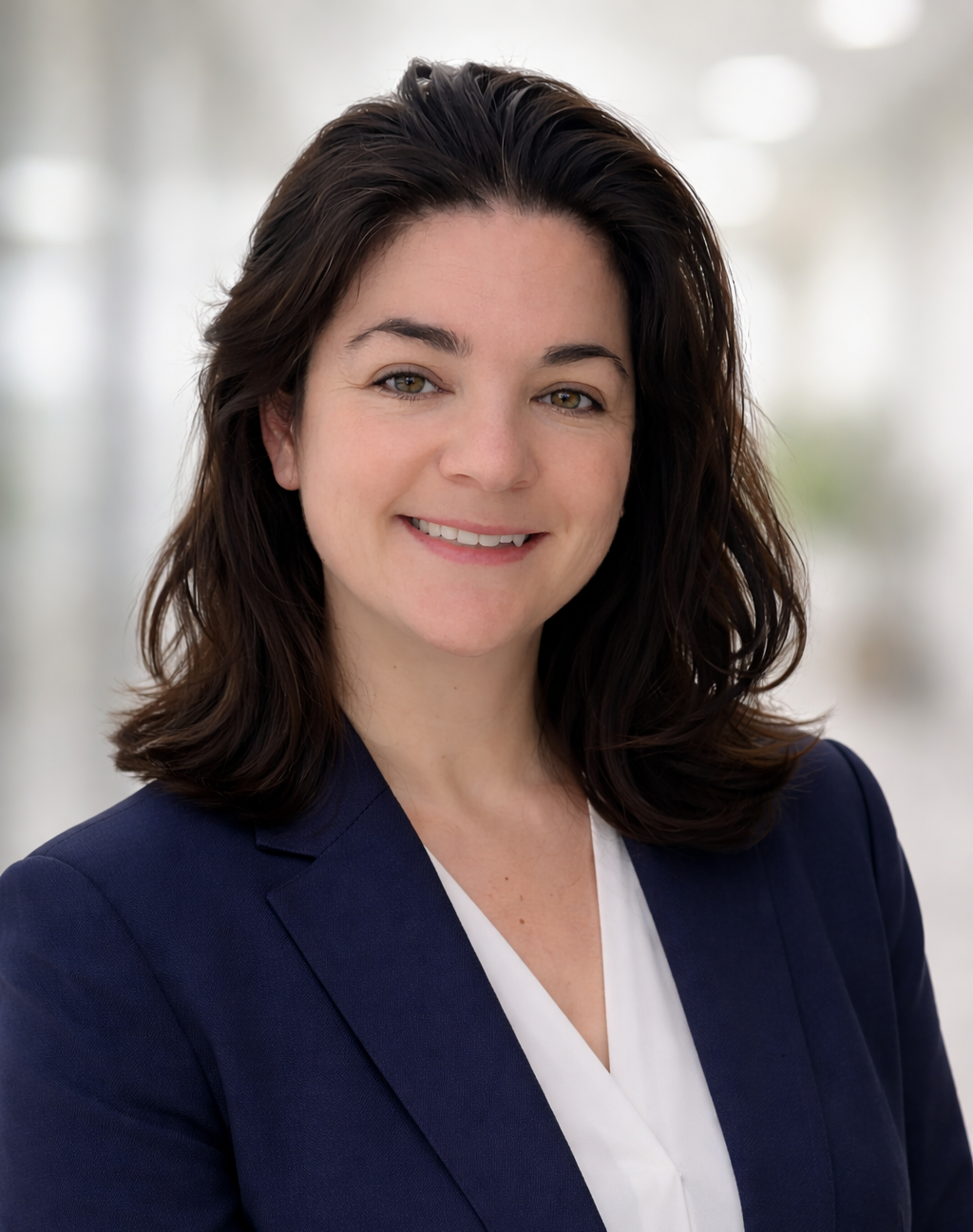
We asked Dr. Tchaiko Parris, MD, PhD, Medical Director of Mammography & Breast Cancer Prevention at ImageONE, how she approaches this balance and why conversations around overdiagnosis should be viewed not as a reason to screen less, but as an opportunity to continue improving patient care.
The Goal Isn't More Biopsies. It's Better Decisions.
One of the biggest misconceptions about breast cancer screening is that radiologists simply want to find every abnormality possible.
"In reality," Dr. Parris explains, "the goal is to identify the cancers that truly benefit from early detection while avoiding unnecessary biopsies and treatment whenever it is safe to do so."
Every recommendation affects a patient waiting for answers. That's why having the right clinical information at the time of image interpretation is so important.
How Better Information Leads to Better Decisions
Clearly identifying known benign findings such as moles, scars, or previous biopsy sites provides valuable context during mammography.
 Products like TomoSPOT® skin markers help radiologists quickly recognize these known areas, supporting more confident interpretation and helping reduce unnecessary callbacks that can lead to additional imaging and biopsies. By improving communication between the technologist and radiologist, skin markers help ensure radiologists have the clearest possible information when making important clinical decisions.
While workflow improvements like skin markers cannot prevent overdiagnosis, they can help reduce uncertainty during image interpretation.
Why Is Overdiagnosis So Difficult to Measure?
Unlike many areas of medicine, overdiagnosis cannot be measured directly. Researchers estimate it using large population studies, with reported rates ranging from approximately 1% to 10%, while some studies suggest rates as high as 20% to 25%. 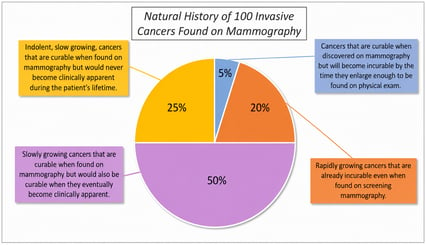
For Dr. Parris, the greater concern is overtreatment.
"The greatest harm of overdiagnosis is overtreatment," she says. "Patients may undergo surgery or additional therapies that ultimately were not needed."
She also references this chart by Kim et al1, showing the constant battle the radiologist encounters as screening mammography is utilized to identify the 55% of cancers that if visualized by a screening mammogram would be curable versus the 25% that when identified via mammography would not have become clinically apparent to cause harm in the patient’s lifetime.
Why Imaging Is Only Part of the Picture
A mammogram shows radiologists what a finding looks like, but it cannot reveal how the cells are behaving. That's why a biopsy is sometimes necessary.
A tissue sample allows the pathologist to determine whether a finding is benign, high risk, or malignant, providing information that imaging alone cannot. Together, imaging and pathology help physicians make the most appropriate recommendations for each individual patient.
Finding the Right Balance
Dr. Parris points to research by Kim et al. that illustrates the daily balancing act radiologists face. Screening mammography helps identify many cancers that are highly curable when detected early, while also detecting some cancers that may never have become clinically significant during a patient's lifetime.
The goal isn't to find fewer cancers. The goal is to become better at identifying which cancers need treatment and which patients can safely avoid unnecessary intervention.
As imaging technology, pathology, artificial intelligence, and risk assessment tools continue to evolve, physicians will be better equipped to personalize care while preserving the lifesaving benefits of breast cancer screening.
A Thoughtful Approach to Screening
Breast cancer screening isn't simply about finding more cancers. It's about finding the cancers that matter most.
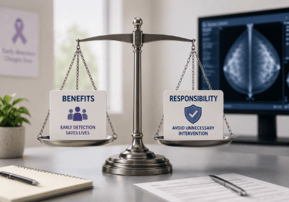 Every mammogram requires radiologists to balance the benefits of early detection with the responsibility of avoiding unnecessary intervention whenever possible. Having the right information from patient history to clearly identified benign findings, helps support those decisions.
As research continues to improve our understanding of breast cancer biology, radiologists will have even greater opportunities to make informed decisions that support early detection while minimizing unnecessary treatment, helping ensure every patient receives the right care at the right time.
To learn more about TomoSPOT® skin markers or request a complimentary evaluation sample, contact your Beekley Medical representative or visit our website.
1. Kim L and Lannin D. Breast Cancer Screening: Is there room for de -escalation. Current Breast Cancer Reports. 2022; volume 14, pages 153–161