
 Most people think of mammography as a quick appointment. Ten minutes. Maybe fifteen. A little uncomfortable, but routine. For the patient, it’s just another item in a busy day. For the radiologist reading the exam later, it’s something entirely different.
When a radiologist sits down to read breast images, they’re looking for tiny details that can change someone’s life: subtle asymmetries, faint architectural distortion, or a small cluster of calcifications that may or may not mean something significant. The difference between a normal exam and a suspicious one can come down to millimeters…or to tissue that simply wasn’t captured in the image.
That’s the part most people outside breast imaging never see: interpretation is only as good as the image itself.
The moment when you wish you could see more
Anyone who reads breast imaging knows the feeling. 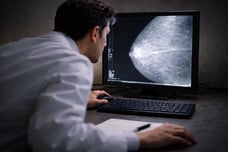
You open a study and start scrolling through the images. At first glance, everything seems routine, but then something catches your eye. Maybe it’s a faint asymmetry. Maybe tissue that looks slightly denser than its surroundings. Sometimes it’s not even a finding yet; you just want a clearer look.
Then you notice the skin fold. Or not enough retroglanular tissue. Or a wrinkle casting a shadow across the breast. And the same thought crosses your mind:
I wish I could see just a little bit more.
That moment is where positioning becomes everything. If the technologist catches the issue during the exam, the image can be retaken, but that means additional compression and additional radiation for the patient. If it isn’t recognized until later, it may lead to a recall. For patients, that can mean days of anxiety waiting to learn if something is wrong.
From the reading room, it’s a reminder: what we interpret depends entirely on what was captured in the mammography suite.
What happens before the image reaches the workstation
Before an image reaches a radiologist, a lot has already happened. Inside the mammography room, technologists balance positioning, patient comfort, and efficiency. Screening exams are often scheduled every 10–15 minutes. Patients arrive anxious, uncomfortable, sometimes already worried about what the exam might show. Positioning the breast perfectly in that environment isn’t always easy.
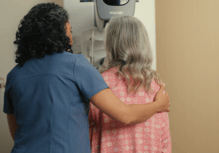 Dr. Amy Patel, a breast radiologist and Medical Director of the Breast Care Center at Liberty Hospital, writes about this challenge in her paper on improving patient comfort and clinical efficiency in mammography. Skin folds, perspiration, or fragile skin can complicate positioning and sometimes require technologists to repeat images.
Those challenges don’t stay in the mammography room - they appear later in the images radiologists read.
When positioning works
And then there are the cases where everything comes together. You open the study and immediately notice the difference. Posterior tissue is captured. The pectoralis muscle is well visualized. Skin folds aren’t obscuring anatomy. The images simply read the way they should.
These are the cases where interpretation feels clear and confident. The anatomy is visible, and the focus stays where it belongs: on detecting subtle abnormalities, not wondering what might be hidden just outside the field of view.
That’s what good positioning looks like from the reading room.
Small changes that make a difference
Dr. Patel’s paper highlights something many breast imaging professionals already understand: small adjustments during the exam can meaningfully improve both patient comfort and image quality.
In her experience, tools like Bella Blankets® protective coverlets can help stabilize the breast during compression. Their textured surface helps prevent tissue from slipping posteriorly while minimizing skin folds that could obscure anatomy. They also provide a soft barrier between the
patient and the receptor plate, helping reduce perspiration and the risk of skin tears, particularly in patients with fragile skin.
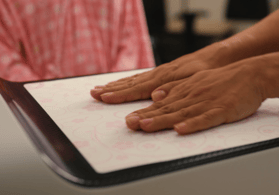
From a workflow perspective, it may seem like a small detail. But from the reading room, small details matter.
Dr. Patel describes cases where Bella Blankets improved positioning and eliminated persistent skin folds seen on prior mammograms. In one example, improved positioning even allowed more pectoralis muscle to be visualized on the MLO view, which is an indicator of proper positioning.
For technologists, the exam became easier to perform.
For radiologists, the images became easier to interpret.
And for patients, the experience was more comfortable.
The bigger picture
Radiologists may read the exam, but the quality of that exam is built long before it reaches the workstation. It starts in the mammography suite, with the technologist guiding the patient into position and making the small adjustments that help the breast stay stable during compression.
Because when positioning is easier, images are clearer. And when images are clearer, radiologists can focus on what matters most: detecting the smallest signs of breast cancer as early as possible.
Better positioning leads to better imaging. Better imaging leads to better care.
Want to see the impact in practice?
Dr. Amy Patel’s paper, Bella Blankets in Action: Protective Coverlets Improve Mammography Patient Comfort and Clinical Efficiency, explores how small adjustments during mammography, such as using Bella Blankets® protective coverlets, can improve positioning, reduce skin folds, and create a more comfortable experience for patients while supporting clearer imaging for radiologists.
To learn more about the cases and insights described in the study, read the full paper here.