
 For many women, scheduling a mammogram can bring up fear, uncertainty, and even memories of difficult past experiences. Anxiety often begins long before they arrive for their exam. Concerns about pain, embarrassment, or what the results might show can make the process feel overwhelming. These emotions sometimes lead to delayed screenings, incomplete exams, or hesitation to return.
During the Mammography Educators webinar, "Transforming the Patient Experience in Mammography From Fear to Trust," Dr. Stacy Smith-Foley, Breast Imaging Specialist at The Breast Center at CARTI Cancer Center in Little Rock, Arkansas, shared her perspective on how mammography technologists can help patients feel calm, confident, and cared for.
“If we want patients to trust us,” she explained, “we have to first understand what makes them fearful and then intentionally remove each barrier.”
Understanding the Barriers
Dr. Smith-Foley identified several key obstacles that can make mammography intimidating, and they are not all emotional or medical.
- Lack of communication - Patients often do not know what to expect. Uncertainty increases anxiety.
- Perception of pain - Compression is necessary, but when patients feel rushed or unheard, discomfort becomes the focus.
- Vulnerability and privacy - Undressing, physical closeness, and exposure can make patients feel self-conscious.
- Socioeconomic and logistical challenges - For many women, scheduling a mammogram means taking time off work, arranging childcare, finding transportation, or paying for parking. These everyday stressors can lead to delays or skipped appointments.
- Past experiences and callbacks - A previous painful exam or a callback for additional imaging, even when results are benign, can leave lasting fear that discourages future screenings.
“We have to remember that for a lot of patients, getting here is not easy,” Dr. Smith-Foley said. “They may be balancing work, family, and financial concerns. If we can make the experience smoother and more compassionate once they arrive, it can make all the difference.”
By acknowledging these emotional, practical, and financial barriers, technologists can better anticipate and address them before they impact patient cooperation or image quality.
Consistency Builds Confidence and Efficiency
Dr. Smith-Foley emphasized the importance of consistency not only in how exams are performed but also in how information is communicated. She highlighted the BI-RADS® system, which provides a standardized framework for reporting and follow-up.
“Standardization is key,” she noted. “When everyone speaks the same language — radiologists, technologists, and patients, it reduces confusion and fear.”
 That shared language benefits both patients and staff. When technologists follow consistent communication and documentation practices, radiologists receive clearer images and more uniform information. This reduces unnecessary callbacks and repeat exams, saving time and creating a smoother experience for everyone.
Consistency also builds patient satisfaction. When patients sense that their care is organized, coordinated, and efficient, they have greater confidence in the quality of the facility. Surveys routinely show that clarity, professionalism, and communication are leading contributors to positive patient experiences in mammography.
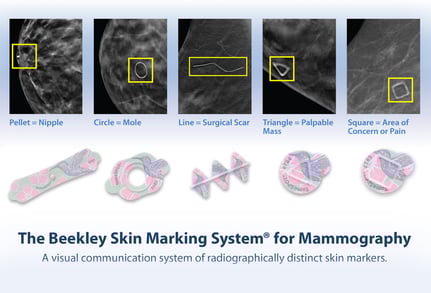
Dr. Smith Foley also discussed the importance of standardized skin marking and annotation. Clearly identifying moles, scars, or areas of concern helps radiologists interpret images with confidence and avoid unnecessary confusion.
Using clear, radiopaque skin markers like those found in the Beekley Medical Skin Marking System supports that standardization across the team. Designed for marking scars, focal pain, moles, palpable masses, and nipple position, TomoSPOT skin markers for mammography provide a consistent visual reference that improves accuracy in tomosynthesis imaging.
“When you see consistent, high-quality marking on every patient, you know that attention to detail is part of the culture,” Dr. Smith-Foley said. “That is what builds trust with patients and within the imaging team.”
Consistent skin marking improves diagnostic confidence, saves interpretation time, and enhances both patient satisfaction and departmental workflow.
A Case in Comfort: Seeing the Difference
To illustrate these principles, Dr. Smith-Foley shared a case from her practice involving a patient who arrived anxious and hesitant about compression. The technologist caring for her took an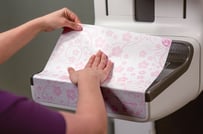 extra moment to reassure the patient before applying a Bella Blankets® protective coverlet, a simple addition that provided a softer, more comfortable surface.
The result was immediate. The patient relaxed, her breast tissue spread more evenly, and the resulting image showed better visualization near the chest wall. Later, the woman commented that it was “the most comfortable mammogram I have ever had.”
This case demonstrated how empathy and comfort can go hand in hand with clinical excellence. Using tools such as Bella Blankets supports both patient comfort and optimal image quality while improving workflow and technologist satisfaction.
From Experience to Excellence: Measuring What Matters
Dr. Smith-Foley encouraged mammography centers to measure the success of compassionate care through patient feedback and satisfaction surveys.
“Every positive patient survey represents someone who will not only come back next year,” she explained, “but who will also tell her friends, her family, and her doctor about how well she was cared for.”
 Higher patient satisfaction scores are linked to improved compliance with annual screenings
and a stronger reputation for imaging centers. When patients feel valued and respected, they are more likely to return and recommend the facility to others.
Small, meaningful improvements, like explaining the BI-RADS® process, providing timely callback communication, marking scars with TomoSPOT skin markers, or improving comfort with Bella Blankets protective coverlets, can have a measurable impact on both patient loyalty and departmental efficiency.
Building Trust That Lasts
When fear is replaced by trust, consistency follows. Patients who feel supported are more likely to keep up with their regular mammography screenings, leading to earlier detection and better outcomes. Dr. Smith-Foley encouraged technologists to view each exam as an opportunity to strengthen that ongoing relationship.
“You are the bridge between fear and reassurance,” she said. “What you do in those few minutes can change how a woman feels about mammography for the rest of her life.”
Transforming the mammography experience is about creating a culture of compassion through consistent, intentional care. When technologists communicate clearly, implement standardization, and use comfort-enhancing tools, they build trust, improve workflow efficiency, and enhance patient satisfaction.
Every detail matters — the words, the tone, the empathy, the care. Together, they turn fear into trust, one patient at a time