
 A “normal” mammogram does not always mean cancer isn’t present, and when it isn’t, care teams need to be ready to act quickly and confidently. In some cases, breast cancer is diagnosed between routine screenings, which clinicians refer to as interval breast cancer. These cases highlight the complexity of breast imaging and the importance of clear communication across the care continuum.
We asked Dr. Tchaiko Parris MD, PhD, Medical Director of Mammography & Breast Cancer Prevention at ImageONE, to share her insight into why interval cancers occur and what this means for patient care.
What Is Interval Breast Cancer and Why Does It Occur?
 Interval breast cancers are diagnosed between regular screening mammograms and fall into two categories: cancers that truly were not present at the time of screening, and those that were present but not detected. These cancers are often more aggressive, growing quickly and presenting at a later stage than those found during routine screening.
Breast density plays a major role in detection challenges. Dense tissue can obscure developing tumors, making cancers harder to identify on mammography, even with advanced imaging.
While technologies like MRI and contrast-enhanced mammography can improve visibility, imaging can only show what is present at that moment, not how aggressive a cancer may be at a biological level.
From Detection to Treatment: Why Communication Matters
For patients, an interval breast cancer diagnosis can feel unexpected and overwhelming. Dr. Parris emphasizes the importance of clear, compassionate communication and helping patients understand they did nothing to cause the cancer while reinforcing the value of annual screening and personalized imaging strategies.
Once cancer is identified, the focus shifts quickly to treatment planning. At this stage, clear communication between the surgical, radiology, and pathology teams becomes essential, especially in breast-conserving procedures where accurate specimen orientation directly impacts clinical decisions. Any ambiguity at this point can slow decision-making or lead to unnecessary rework, particularly in cases where timing and precision matter most.
Improving Clarity in Specimen Orientation
MarginMap® Specimen Orientation Charms provide a standardized way to clearly identify specimen margins at a glance. This helps all teams involved make the best decisions for the patient in the least amount of time.
With six distinctly shaped, radiopaque charms sutured directly to the specimen, each margin remains visible and unmistakable throughout imaging and handling.
Unlike traditional sutures, which can shift or become difficult to interpret, MarginMap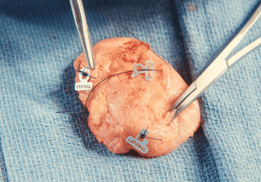 eliminates guesswork, helping teams move faster, reduce back-and-forth, and make more confident decisions. By improving communication between the surgeon, radiologist, and pathologist, MarginMap supports a more efficient workflow and helps ensure clarity from the operating room through final diagnosis.
Interval breast cancer highlights the complexity of breast imaging and the importance of coordinated care. With the right combination of screening, communication, and tools that improve clarity, care teams can move forward with greater confidence, ensuring patients receive timely, precise treatment without unnecessary delays or uncertainty.
If you would like to see how MarginMap can help improve specimen orientation and communication across your team, request your sample here.